


Why Is Paint Peeling Outdoors?
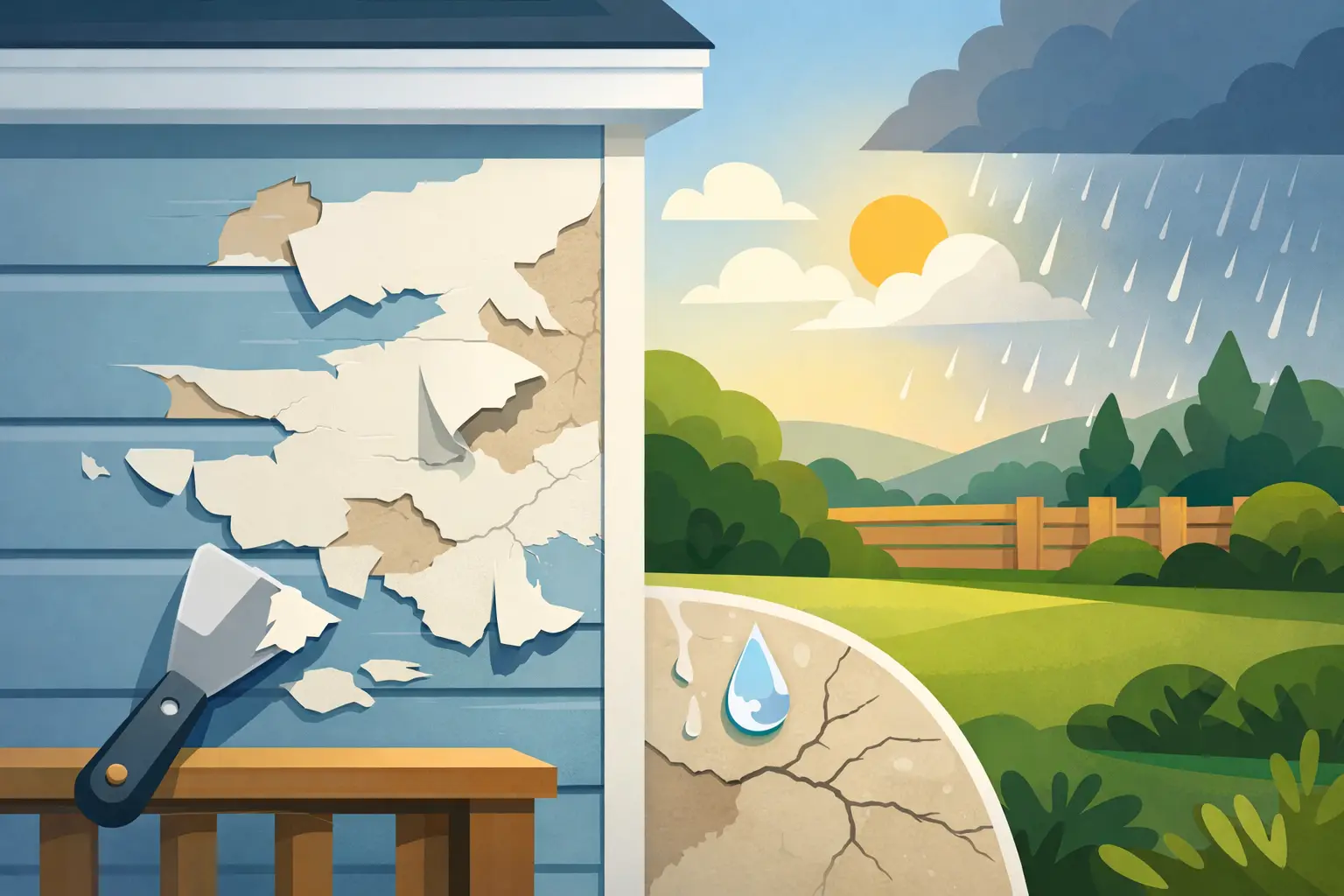
Fresh exterior paint should not start lifting after one hot summer, a wet spell, or a few cold mornings. If it is blistering, flaking, or coming away in strips, the question is fair – why is paint peeling outdoors when the job did not seem that old? In most cases, the paint is not the real problem. The surface underneath, the weather during application, or moisture moving through the building is usually what caused the failure.
Why is paint peeling outdoors on some homes faster than others?
Outdoor paint takes a beating in Australian conditions. Strong UV, driving rain, coastal salt, western sun, morning dew and changing temperatures all put pressure on the coating. But paint usually peels early because one or more basics were missed before or during the job.
A properly prepared and correctly painted exterior should wear down gradually. It should fade, lose a bit of sheen, or look tired over time. Peeling is different. Peeling means the paint has lost adhesion. Once that bond breaks, the finish stops protecting the surface and the problem tends to spread.
The reason one property peels faster than another often comes down to exposure and maintenance. A shaded wall can stay damp longer. A coastal home can cop salt and moisture. An older timber weatherboard house may have years of unstable paint layers underneath. Even two sides of the same building can age very differently depending on sun, airflow and drainage.
The most common causes of outdoor paint peeling
Moisture getting behind the paint
This is the big one. Exterior paint needs a sound, dry surface to stick properly. If water gets in from behind, the coating can bubble and lift no matter how good the paint was.
Moisture can come from obvious issues like leaking gutters, cracked render, failed sealant around windows, roof run-off or plumbing faults. It can also come from less obvious sources such as condensation, rising damp, or timber that never fully dried before painting. On masonry surfaces, trapped moisture vapour can push the paint film off from underneath.
When peeling is localised around window frames, eaves, lower walls or joins, moisture is often the first thing to check. Repainting without fixing the water source usually leads to the same failure again.
Poor surface preparation
Most exterior paint problems start before the first coat goes on. Dirt, chalky residue, mould, loose old paint and glossy patches all interfere with adhesion. If the surface was not cleaned, scraped, sanded and primed where needed, the new coating may only be sticking to contamination or unstable old paint.
This is especially common on repaint jobs. A wall can look solid from a distance but still have failing layers underneath. If those layers are left in place, the new paint is only as good as the weakest layer below it.
Preparation also matters on different substrates. Timber, render, fibre cement, metal and previously painted masonry all need slightly different treatment. Using a one-size-fits-all approach usually catches up with the job later.
Painting in the wrong weather
Exterior painting is heavily affected by conditions on the day. If paint is applied in direct heat, the surface can get too hot and the coating may dry too fast. That sounds harmless, but fast skinning can stop the paint bonding properly or trap solvents and moisture underneath.
If paint is applied when the surface is damp from rain, dew or high humidity, adhesion can suffer straight away. Cold temperatures can also slow curing and affect how the film forms. In Sydney and across NSW, you can have a wall that looks dry enough but still holds moisture from overnight humidity, especially in shaded areas.
This is one reason exterior jobs need timing, not just manpower. Fast starts are useful, but rushing a wall that is not ready can cost more in the long run.
Skipping the right primer
Primer is not just an optional extra for problem areas. On many exterior surfaces, it is what helps the paint grip, seals porosity and creates a stable base coat. Bare timber, patched areas, stained spots, weathered surfaces and some masonry repairs often need the right primer before topcoats go on.
Without it, the finish may absorb unevenly, dry patchy or fail to bond properly. On older houses, primer can also help isolate previous coatings that have gone brittle or powdery with age.
Using incompatible products
Not all paint systems work well together. If the old coating and the new coating are incompatible, you can end up with poor adhesion, wrinkling or peeling. This can happen when cheaper products are used over existing specialised coatings, or when a surface needs a more breathable system than the one applied.
Masonry is a good example. Some surfaces need coatings that let moisture vapour escape. If a less breathable product is used where moisture is already present, the pressure can build and force the paint off.
Too many failing old coats underneath
Sometimes the latest paint job gets blamed for a problem that has been building for years. Older homes can have multiple generations of paint on them. If those layers are thick, brittle or already starting to let go, a fresh coat will not solve it. It may look fine for a short time, then begin peeling as the old system breaks away.
That is why some areas need more than a wash and repaint. They may need full removal back to a sound substrate before the coating system is rebuilt properly.
Signs the issue is more than normal wear and tear
A faded wall is one thing. Paint coming away in sheets is another. If you see bubbling, widespread flaking, hairline cracks turning into lifting edges, or bare substrate showing through, the coating has moved past cosmetic ageing.
Mould stains, soft timber, salt deposits, rust bleed or peeling that keeps returning in the same area usually point to an underlying issue. In these cases, a quick patch-up can tidy the look for a while, but it rarely fixes the cause.
Can you just scrape and repaint?
Sometimes yes, but only if the failure is minor and the surface underneath is still sound and dry. A small localised area caused by impact damage or isolated weathering may be repairable with scraping, sanding, spot priming and recoating.
If the peeling is widespread, moisture-related or tied to failing old paint layers, a simple repaint is usually money wasted. The job may need a more thorough approach – remove all loose material, identify moisture entry points, repair the substrate, prime correctly and then apply the full system under suitable conditions.
This is where experience matters. The visible problem is paint peeling, but the real issue might be joinery gaps, poor drainage, substrate movement or years of shortcuts from previous work.
Why is paint peeling outdoors after a recent paint job?
When outdoor paint fails early, the cause is usually one of four things: the surface was not properly prepared, the substrate was not dry enough, the weather during application was unsuitable, or the product system was wrong for the surface.
That can be frustrating for owners because the house may have looked great at handover. Early peeling often shows up once the coating has gone through a few weather cycles. Heat expands surfaces, nights bring moisture back in, and weak adhesion starts to reveal itself.
If the job is only recently done, do not ignore the first small signs. Early intervention is much cheaper than waiting until whole sections let go.
What property owners should do next
Start by looking beyond the paint itself. Check for leaking gutters, downpipes, cracked caulking, failed flashing, ponding water, garden sprinklers hitting walls, and areas that stay damp for long periods. If timber is involved, check whether it feels soft or spongy. If masonry is involved, look for white salt-like deposits or damp staining.
After that, assess how widespread the peeling is. If it is just a small isolated spot, it may be a straightforward repair. If it is affecting multiple elevations, repeating around openings, or showing on render and timber at once, the safest move is a proper site assessment before any repainting starts.
For landlords, strata managers and commercial owners, this matters even more. Peeling paint is not only a presentation issue. It can expose surfaces to faster deterioration, create ongoing maintenance costs and turn a manageable repair into a bigger remedial job.
A reliable painter will not just price the repaint. They should explain what failed, why it failed, and what needs to happen first so the new finish lasts.
Exterior paint should protect, not peel. If it is already lifting, treat that as a sign the building is asking for more than another coat. Fix the cause, prepare it properly, and the finish has a far better chance of doing its job for years.


2 thoughts on “Why Is Paint Peeling Outdoors?”