



A Guide to Interior Painting Timelines
If you are trying to line up painters, furniture moves, tenants, tradies or an upcoming handover, timing matters as much as the finish. This guide to interior painting timelines is built to answer the question most property owners ask straight away – how long is this actually going to take?
The honest answer is that it depends on the size of the job, the condition of the surfaces, access, drying time and how many rooms are involved. A neat bedroom repaint is very different from a full-house refresh with patching, stain blocking and dark-to-light colour changes. Good painters will give you a realistic schedule, not just a fast one.
What affects an interior painting timeline?
Interior painting is not just the time spent rolling paint onto walls. The full timeline includes preparation, protection of floors and furniture, patching, sanding, caulking, priming where needed, painting, drying and final touch-ups. On larger projects, setup and clean-up also take real time.
Surface condition is one of the biggest variables. If the walls are already in decent shape and you are repainting with a similar colour, the job moves faster. If there are cracks, water marks, peeling paint or nicotine staining, extra prep is needed before the finish coats can even begin.
Room size and layout also matter. Open-plan living areas can be efficient because there is less stopping and starting, but they also involve a lot of wall area and cutting in. Smaller rooms with wardrobes, doors, trim and awkward corners often take longer than people expect.
Then there is occupancy. An empty property is usually quicker to paint than a lived-in home or active commercial space. Moving furniture, protecting belongings and working around people adds time, even when the painting itself is straightforward.
A practical guide to interior painting timelines by project type
For a single standard room in good condition, painters can often complete the work in one day, sometimes stretching into a second day if there is repair work, trim painting or limited ventilation. That usually covers prep, two coats on the walls and basic clean-up.
A two or three-bedroom home generally takes two to five days for interior walls only, assuming average ceiling heights and standard prep. If ceilings, doors, frames and skirting boards are included, the timeline can extend to four to seven days.
A full interior repaint of a larger home can take a week or more. If the property has detailed trim, older plaster, extensive patching or multiple feature colours, allow extra time. Older homes often look simple from the outside but need more preparation to get a clean, lasting result.
Rental properties and investment homes can sometimes be completed faster if the scope is limited and the property is vacant. Commercial and strata interiors vary more. Timing depends on access hours, staging requirements, tenant needs and whether the space has to remain operational during the job.
The usual stages of an interior painting job
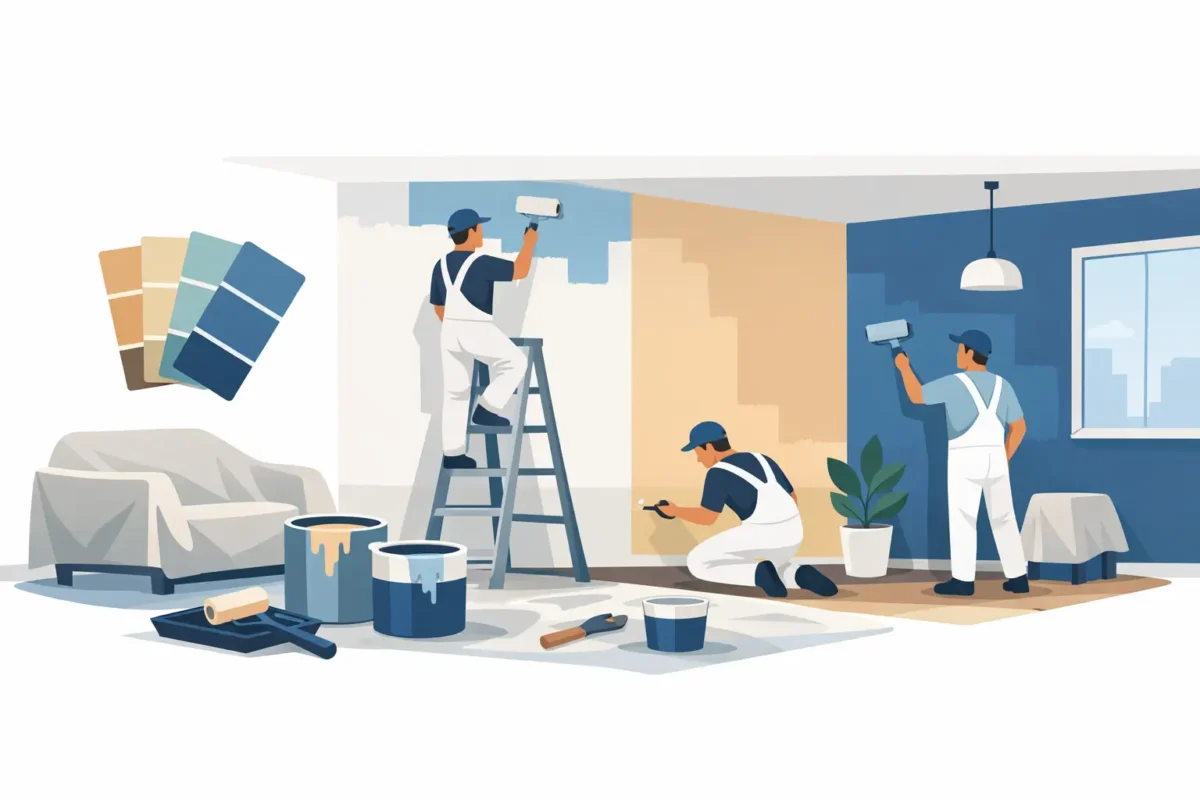
The first stage is preparation. This includes covering floors, moving or protecting furniture, removing switch plates where needed, filling holes and sanding surfaces. If the walls need a proper wash or mould treatment, that happens before painting starts.
Next comes priming, but only where it is required. Fresh plaster, repaired areas, stained patches and major colour changes often need primer. Skipping this step can save time in the short term and create problems later, so this is not where a good painter cuts corners.
After that come the finish coats. Most interior jobs need at least two coats for solid coverage and even colour. Between coats, painters need to allow for drying time. Dry to touch is not the same as ready for another coat, and rushing that gap can affect the finish.
The last stage is detailing and clean-up. This is where painters check for holidays, tidy cut lines, remove masking, reinstall fittings and leave the place presentable. It is also the difference between a rushed job and a professional one.
Drying time versus completion time
This is where many timelines get confused. Painting a room and being able to use it normally are not always the same thing.
Most modern water-based paints dry to touch within a few hours, but curing takes longer. You may be able to move carefully through a room the same day, yet it is still wise to wait before pushing furniture back against walls or hanging artwork. Fresh paint can mark more easily in the first few days.
Humidity, airflow and temperature all affect drying. Even indoors, a rainy week can slow things down. In Sydney and broader NSW, that matters more than people think, especially in homes with limited cross-ventilation or shaded rooms that stay cool.
For occupied homes, this means the practical timeline should include not just the painting days, but the period needed before each room is fully back to normal.
How to plan around the schedule
The best approach is to work backwards from your deadline. If you need the house ready for tenants, a sale campaign, visitors or other renovation trades, leave a buffer. Painting is often one of the final steps, and delays earlier in the project can compress the time available.
If you are staying in the home during the work, ask whether the project can be staged room by room. This helps reduce disruption, but it can add a little time because painters are working around daily living rather than through a clear, empty space.
It is also worth being clear on scope from the start. Are ceilings included? What about skirting boards, doors and frames? Is there minor patching only, or significant repair work? A clear scope leads to a more accurate timeline and fewer surprises once the job starts.
When fast is good, and when it is a red flag
Everyone wants a quick turnaround. That is fair. But there is a difference between an efficient team and a rushed job.
Fast can be a good sign when the painters have enough labour on site, the surfaces are in good condition and the scope is tightly defined. Experienced crews work quickly because they are organised, not because they skip steps.
Fast becomes a problem when preparation is brushed aside, drying times are ignored or touch-ups are left for later and never properly finished. A low quote with a very short timeline can look attractive, but if the finish fails early, you end up paying twice.
A dependable contractor should be able to explain how long each stage will take and why. That gives you a schedule you can trust, not just one you hope for.
Common causes of delay
The most common delay is extra prep uncovered after the job starts. Once furniture is moved and walls are inspected properly, hidden cracks, patchy old repairs or stains often become obvious.
Colour changes can also slow things down. Going from a dark wall to a light neutral usually needs more work than repainting with a similar tone. The same goes for problem surfaces in kitchens, bathrooms and high-traffic hallways.
Access issues matter too. Late key handovers, rooms that are still full of belongings, or other trades working in the same area can all push the schedule out. None of this is unusual, but it does need to be allowed for.
Questions worth asking before booking
Ask how long the job should take based on the actual scope, not a rough guess over the phone. Ask what prep is included, how many coats are planned and whether the property needs to be vacant. If timing is critical, ask what could cause delays and how the team handles them.
It also helps to ask when rooms can be used again. That is often more useful than just asking when painting finishes, especially for families, landlords and business owners trying to minimise downtime.
A clear schedule, a realistic start date and a crew that turns up when promised are what make a painting project feel under control. That is exactly what most clients are after.
Good interior painting is not just about getting the colour on the wall. It is about planning the job properly, respecting the property and finishing on time without cutting the corners you will notice later.

One thought on “A Guide to Interior Painting Timelines”